Chandiveti’s Forgotten Heritage: The Crumbling Ancestral House of Deshpran Birendranath Sasmal
In Chandiveti village of Purba Medinipur stands the deteriorating ancestral house of Deshpran Birendranath Sasmal, a prominent figure in Bengal’s freedom movement. Despite its historical significance, the house continues to face questions about preservation, public responsibility and the protection of local heritage.
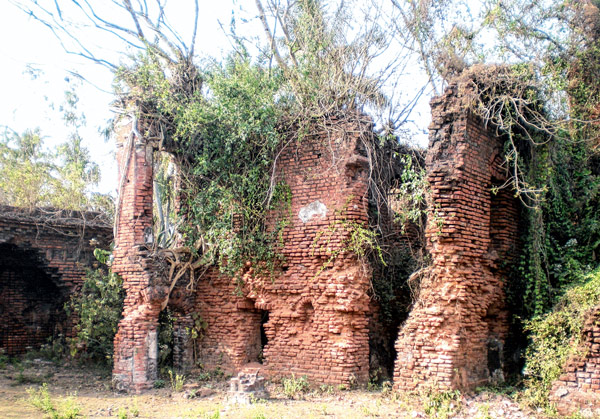
A House That Holds a Chapter of History
Around ten kilometres from Contai (Kanthi), in Chandiveti village of Purba Medinipur, West Bengal, stands the ancestral house of Deshpran Birendranath Sasmal. Once a large, two-storey residence, the building is now a reminder of how easily historically significant places can slip into neglect.
Birendranath Sasmal was born here on 26 October 1881, according to several biographical accounts. His father, Biswambhar Sasmal, was a landholder, and his mother was Anandamoyee Devi. The house was more than a family residence. According to Anandabazar Patrika, his uncle, Ramdhan Sasmal, established a girls’ school in the family home, connecting the property with the history of education in the region.
From Chandiveti to the Freedom Movement
Sasmal’s early life in Chandiveti preceded a career that made him one of the most influential nationalist leaders in Midnapore. After studying at Contai High School and Ripon College in Calcutta, he travelled to England to study law and returned to India as a barrister in 1904.
His contribution to the freedom movement extended beyond legal practice. He organised opposition to the proposed division of Midnapore and later became a leading figure in the Non-Cooperation Movement. During the No-Tax Movement of 1920–22, he mobilised people against the Union Boards established under the Bengal Village Self-Government Act. His leadership earned him the popular title Deshpran, as well as the reputation of Midnapore’s “Uncrowned King”.
The ancestral house is closely associated with these formative years. A report published by PageFour in July 2025 also recounts his departure for England after receiving his mother’s blessings. However, the sources consulted do not establish the date of his last visit to Chandiveti. It would therefore be inaccurate to assign a final visit to a particular year without further documentary evidence.
A Legacy Under Threat
The condition of the house has attracted concern for years. In an October 2015 report, Anandabazar Patrika described the birthplace as deteriorating because of inadequate maintenance and administrative inaction. The article highlighted the contrast between public commemorations of Sasmal’s birth anniversary and the condition of the building itself.
In May 2023, another Anandabazar Patrika report documented work around the property and the construction of an approach road before a scheduled political visit. It also noted that the house had remained without proper restoration for a long period. Road improvements, however, are not the same as structural conservation of a historic building.
Concerns persisted. A report published by Ei Samay on 27 October 2025 described the birthplace as overgrown and neglected. Local residents and heritage advocates called for preservation, while the July 2025 PageFour report discussed demands for heritage recognition and restoration. These reports document continuing concerns, but they do not establish the house’s precise condition today or prove that no government action has occurred since their publication.
Preservation Beyond Commemoration
Birendranath Sasmal died on 24 November 1934. His political legacy remains part of the history of Bengal’s independence movement, and the surrounding area continues to bear his name. Yet the condition of his ancestral house raises an important heritage question: how should a region preserve the physical places that connect present generations with its past?
A documented conservation plan, structural assessment, protection against further deterioration and public access to historical information could help safeguard the site. Until its current ownership, heritage status and restoration arrangements are verified, responsibility for the building should be discussed through documented evidence rather than assumptions.
Chandiveti’s ancestral house is not simply a reminder of one individual. It is part of the region’s historical record. Preserving it would help future generations understand the life of Deshpran Birendranath Sasmal in the place where his story began.
Reviews
- No reviews yet. Be the first.
Comments(0)
Sign in to join the conversation.
No comments yet.